
About me, independent SEO consultant

I'm Anurag. I enjoy figuring out how search works.

I have worked in SEO for over 15 years, from technical foundations and content strategy to getting brands cited in AI-generated answers.

Today I work with B2B SaaS, cybersecurity, MSP, MSSP, manufacturing, and technology companies from offices in Dubai and Toronto. You work directly with me from the first call onward.

How I work
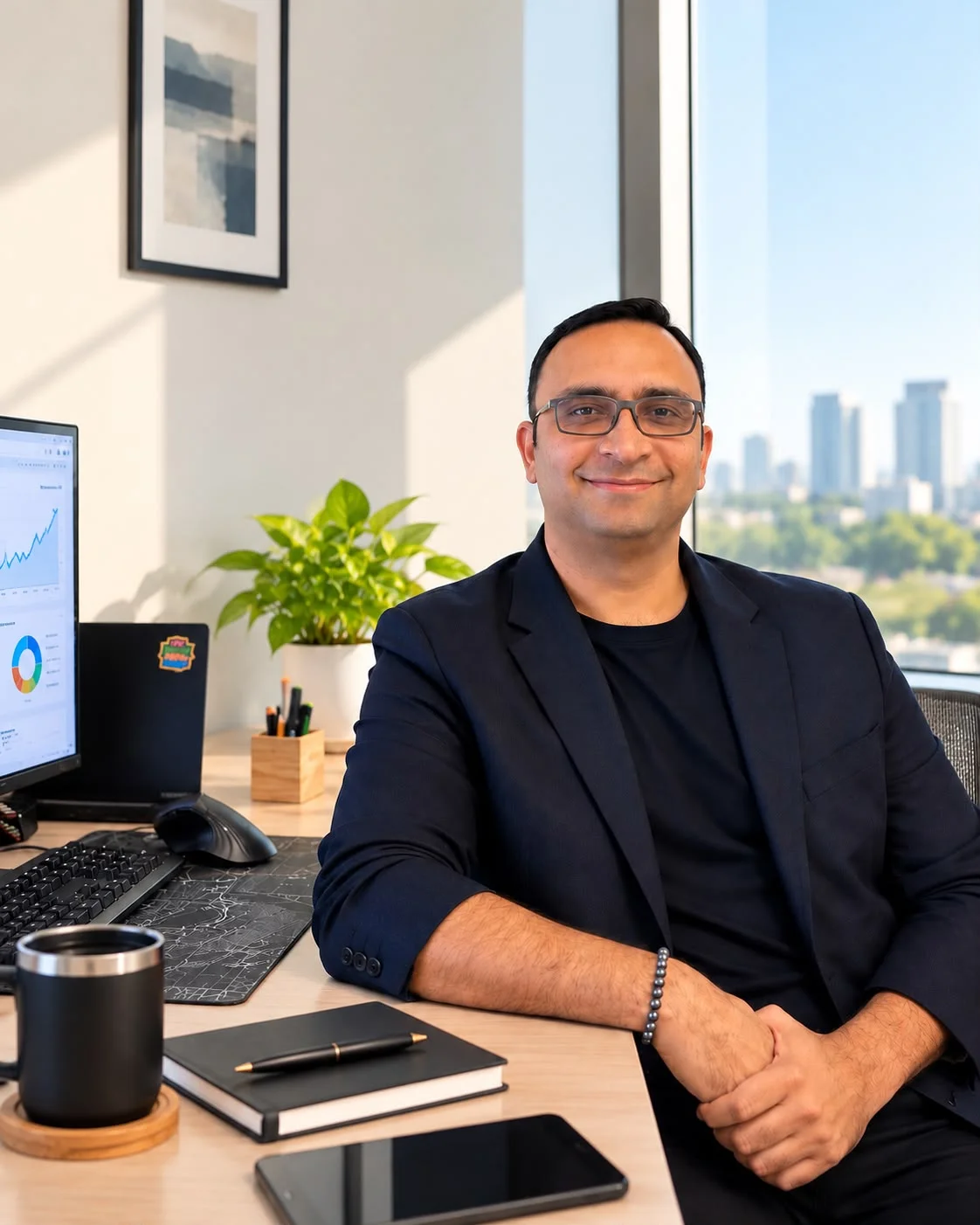
Anurag Pareek, SEO, AEO and GEO consultant, at his desk with a search performance dashboard on screen

The story

It started with a website I wanted people to visit.

In 2006, I was learning to build websites as part of my studies. Building one was the easy part. Getting people to visit it, and working out how that traffic could earn money, was harder.

That question led me to search engines, and then to SEO. Web development never held my attention the way the research did: why one page was found and another was not, and how a change in one part of a site could shift the result somewhere else.

My background in engineering, information systems, and internet security gave me a taste for hard technical problems. SEO had plenty of them.

To me, SEO is a machine with interconnected moving parts. The interesting work is figuring out how they influence one another.

That curiosity took me from Perth to Toronto and then Dubai. It still shapes the work today, as search moves past the results page and into AI-generated answers.

Perspective

I've worked on both sides of the table.

Alongside independent consulting, I spent years in-house, leading SEO and marketing at Canadian telecom and managed services companies. In one of those roles, I grew organic traffic 245% over three years and took 200 commercial keywords into Google's top three, ahead of Canada's largest telecom carriers.

245%
Organic traffic growth over 3 years
200
Commercial keywords in Google's top 3

Working inside those teams taught me that a technically correct recommendation is only useful when someone can act on it. I have dealt with limited developer time and slow approval cycles from the inside, and I know how to explain SEO decisions to people who do not work in search every day.

My job is to turn the research into a clear plan, and to stay involved until that plan becomes finished work.

Working together

How I work

I work directly with your team from the first call, and adjust the level of support to your resources and what the business needs.

  1. Learn the business before the keywords

    I start with your products, customers, sales process, competitors, and how you define a good lead. A search opportunity only matters if it fits how your business sells.

  2. Research before recommending

    I examine search performance, site architecture, technical issues, content, competitors, and AI search visibility. The aim is a short list of the work that will move results, so you are not left sorting through a 200-page audit.

  3. Give developers clear requirements

    I write development tickets that explain the issue, why it matters, the outcome needed, and a recommended approach. Your developers know the codebase best and decide how to build it. I define the SEO outcome and check it once the work ships.

  4. Fit content support to your team

    With an established content team, I provide research, strategy, briefs, and editorial guidance. For smaller businesses, I can lead content production, with your in-house specialists reviewing the details, adding first-hand experience, and approving each piece before it goes live.

  5. Review, measure, and adapt

    I stay involved through implementation and measurement. We track search visibility, qualified traffic, conversions, and AI citations where they can be measured, and connect them to leads and pipeline when the tracking supports it.

Beyond client work

I still learn by building.

Alongside client work, I run more than 30 test sites of my own. When you are responsible for the content, the technical decisions, the traffic, and the monetisation, you feel every trade-off yourself.

Some experiments work and some do not. Both teach me something about what is worth building, how people search, and what a site's traffic is worth.

Lately I have been vibe coding my own tools with Claude:

Information gain tool

Combines Google's published patents with a client's brand and writing guidelines, so every draft adds something new to what already ranks.

AI visibility audit tool

Runs on my own APIs and tracks brand visibility and share of voice across large language models.

Neither tool is public yet. I built them to do better work for clients and ship it faster.

I share selected observations in my articles, without turning every personal project into a public case study.

Read my articles

Technical foundations

More than a marketing background

Engineering and technology

  • Master of Commerce, Information Systems, Curtin University, Perth campus, Australia
  • Master of Internet Security and Forensics, Curtin University, Perth campus, Australia
  • Bachelor of Engineering, Electronics and Telecommunications, Maharshi Dayanand University, India

That training shapes how I approach technical problems and complex B2B subjects.

Business and execution

Years of in-house marketing and independent consulting have shaped how I turn research into priorities that content, marketing, and development teams can deliver.

Want to see how this plays out for clients? My SEO case studies show the problem, the work, and the measured results for each engagement, with the data source named on every number.